
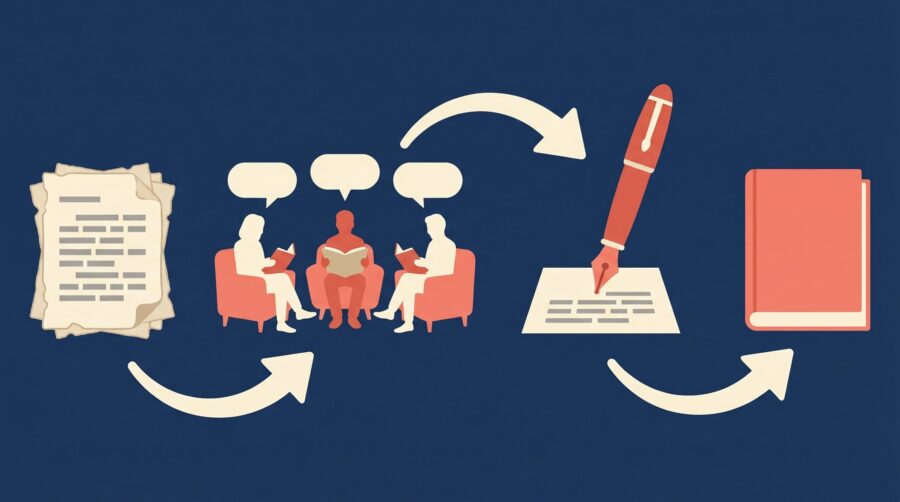
Use beta readers before editing, not after. The right time to send your manuscript to beta readers is after you finish self-editing and before you pay a professional editor. That order lets you fix big story problems for free, so every paid editing round works on a stable, settled manuscript.
What Does a Beta Reader Actually Do?
A beta reader is a volunteer who reads your finished, self-edited manuscript the way an ordinary reader would. Then they tell you how the story landed. Beta readers report the reader experience: where they got bored, which characters they cared about, what confused them, and where the plot stopped making sense. They read for free, usually because they love the genre.
Beta readers are not editors. The Alliance of Independent Authors (ALLi) puts it plainly: beta readers are not editors or proofreaders and should not replace a professional edit or proofread. Instead, ALLi treats them as part of the structural stage of revision, when the shape of the story is still open to change.
The difference shows in the feedback itself. A beta reader will tell you that chapter seven dragged. A developmental editor will tell you why it dragged, how it affects the pacing around it, and what your options are for fixing it. Both kinds of feedback are useful; they simply do different jobs. You may also hear about alpha readers. An alpha reader works through a rough early draft, often chapter by chapter. A beta reader reads a complete draft that you have already cleaned up yourself.
Where Do Beta Readers Fit in the Self-Publishing Timeline?
Beta readers sit between your own self-editing and any professional editing you pay for. For a typical self-published book, the full production sequence looks like this:
- Write the first draft
- Self-edit until you cannot improve the manuscript on your own
- Send the manuscript to beta readers
- Revise using the patterns in their feedback
- Hire professional editing: usually one round, most often copyediting; larger budgets sometimes add a developmental edit first
- Format the interior for print and ebook
- Proofread the formatted pages (proofreading is the one editorial stage that comes after formatting)
- Send advance copies to ARC readers for reviews
- Publish
The logic behind step 3 is simple: beta feedback often triggers big changes. Readers might flag a confusing subplot, a flat ending, or a character who disappears for ten chapters. Those are structural problems, and structural problems mean rewriting. Every stage that comes after beta reading assumes the text is settling down. Finish the rewriting before those stages begin.
Most self-published authors do not buy every editing round. A single professional pass, usually copyediting or proofreading, is the norm, and that makes beta readers more valuable, not less. Whichever round you budget for, beta readers still come first, because an edit polishes sentences. There is no point polishing sentences you may later delete.
The same order applies to nonfiction. Beta readers can tell you whether your chapters make sense to someone new to the subject, and where the explanations move too fast. They cannot verify your facts, though. Fact-checking is a separate task, and it also belongs before copyediting, for the same reason.
The best moment to plan your beta round is the day you finish the first draft. Volunteer readers need recruiting time, so line them up while you are still self-editing.
How Using Beta Readers Before Editing Saves You Money
Using beta readers before editing saves you from paying twice for the same words. The Editorial Freelancers Association (EFA) 2026 rate chart, based on a survey of over 1,100 members, puts median copyediting for fiction at 2.0 to 2.7 cents per word. Proofreading runs 1.2 to 2.0 cents per word. For an 80,000-word novel, that is roughly $1,600 to $2,160 for the copyedit alone.
Now imagine a beta reader spots a real problem after that copyedit is done. Suppose their feedback convinces you to rewrite three chapters, about 12,000 words. Every rewritten sentence is now unedited text sitting inside an edited manuscript. To keep the quality consistent, those chapters need a second pass through copyediting, at the same per-word rates you already paid once. The deeper the changes, the closer the bill gets to a full re-edit. We covered what each type of book editing costs in more detail if you want to budget the whole sequence.
The most expensive version of this that we see in formatting work runs like this: the manuscript is copyedited, the interior is formatted, a printed proof is ordered, and then a late beta reader spots a timeline error. Fixing it means re-editing the changed passages, re-formatting the affected pages, and ordering a fresh proof. Three paid stages repeat because one free stage happened out of order.
There is a quieter cost too. Proofreading is the final safety net before publication. If beta feedback arrives after the proofread and you change even a paragraph, that paragraph goes to print unproofread. The wrong order does not just waste money; it quietly removes quality checks from parts of your book.
How Ready Should Your Manuscript Be for Beta Readers?
A manuscript is ready for beta readers when it is complete and self-edited, but not before. Beta readers should never receive a first draft. A draft full of typos, half-finished scenes, and known plot holes wastes their attention on problems you could have fixed yourself. Some volunteers will simply stop reading. Aim for a clean second or third draft: the story is whole, the problems you already know about are fixed, and the spelling and grammar are tidy enough not to distract.
Recruit more readers than you think you need. Inviting five to ten people is a sensible target. Some will go quiet, and others will send only a line or two. If three readers return detailed, thoughtful notes, you have enough to work with. Agree a deadline when you hand over the manuscript. Two to six weeks is a common window for a full-length novel, with around two weeks at the brisk end.
Give your readers a short brief rather than a blank page. Four to six questions work well, focused on the reading experience rather than the mechanics. For example: Where did you stop reading, and why? Which character did you care about most? Was any part confusing? Did the ending feel earned? Questions like these steer readers toward the structural feedback you need at this stage. Typos can wait, because your copyeditor will catch them anyway.
Make the read easy for each volunteer. Offer the manuscript in the format they prefer: a Word document or Google Doc for readers who like to comment as they go, an EPUB file for readers who want it on an e-reader, or a PDF for readers who like fixed pages. Comfortable readers finish; inconvenienced readers drift.
When the feedback comes back, act on patterns, not individual opinions. One reader disliking your opening is taste; three readers stalling in the same chapter is data. And a practical tip from the formatting side of our work: consolidate everything into one clean master file before you move on. Manuscripts regularly reach us carrying half-resolved tracked changes from several beta readers at once. A stray tracked change that survives into formatting can end up in the finished book.
Beta Readers vs ARC Readers: Which Comes First?
Beta readers come first, and the two roles should never swap. A beta reader reads before editing to help you change the book. An ARC reader receives an advance review copy after editing and formatting are finished, close to launch, to help you promote the book. As Draft2Digital’s guide to reader types notes, ARC readers are not there to suggest changes or point out plot holes; their job is to have honest reviews ready when your book goes on sale.
Confusing the two is a common first-book mistake. If ARC readers start reporting story problems, the beta stage was skipped or came too late. Weeks before launch, there is very little room to respond. Keep the boundary clean: betas shape the book, ARCs launch it. We have a separate walkthrough on setting up an ARC campaign when you reach that stage.
The order is the whole answer: self-edit until you run out of improvements, hand the manuscript to beta readers, and revise on the patterns they reveal. Only then start paying for editing. Free feedback belongs before paid polish. Follow that sequence and every dollar you spend on editing works on the version of the book you actually intend to publish.
Frequently Asked Questions
How many beta readers should I have?
Invite five to ten beta readers and expect roughly half to finish with useful notes. Three detailed responses are enough to reveal patterns. If two or more readers flag the same problem, treat it as real.
Do beta readers get paid?
Most beta readers are unpaid volunteers who receive a thank-you in the acknowledgements and a free copy of the finished book. Paid beta reading does exist: the EFA’s 2026 rate chart lists it at 0.5 to 0.8 cents per word, with a median project fee of $150.
How many drafts do you need before beta readers?
At least two, and often three. Beta readers should get your best self-edited draft: a complete story with known plot holes fixed and clean enough spelling and grammar that errors do not distract from the reading experience.
Can friends be beta readers?
Friends and family can read, but they rarely make good beta readers. They tend to protect your feelings, and they know you too well to read the story cold. Recruit strangers or fellow writers who read your genre, and keep friends as encouragers rather than critics.
How long do beta readers take?
Two to six weeks is typical for a full-length manuscript. Set the deadline when you hand over the file, and start with readers who confirm they can meet it. Paid beta readers usually turn a manuscript around faster than volunteers.
